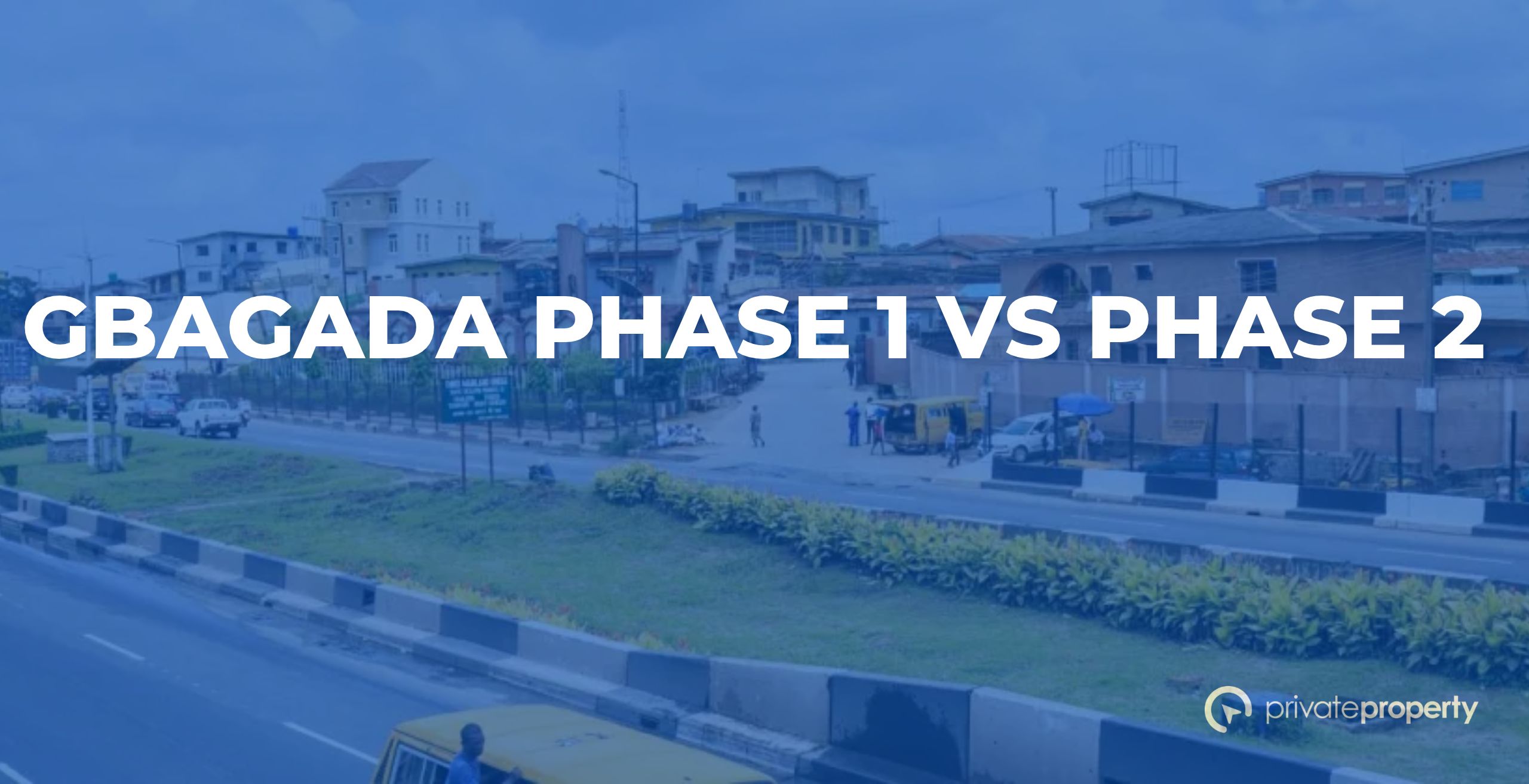
Gbagada is one of the Lagos mainland’s best-loved family suburbs, and one of its most confusing. Agents advertise “Gbagada” as if it were a single place, but the neighbourhood splits into two distinct zones, Phase 1 and Phase 2, and the difference between them affects your rent, your commute, your street noise and your resale value.
The short version: Phase 1 is older, roomier and quieter, while Phase 2 is newer, denser and generally easier on the budget. The longer version, which this guide covers, will help you decide which one actually suits your life.
Gbagada at a Glance
Gbagada sits on the Lagos mainland with direct access to the Third Mainland Bridge, which gives residents one of the fastest mainland-to-island commutes in the city. It is predominantly residential, with mature roads, established schools and a mix of gated estates and open streets. Across the whole area, a typical flat rents for roughly ₦4.5 million a year and sells for around ₦160 million, and prices run well below comparable parts of Lekki.
| Feature | Phase 1 | Phase 2 |
| Origin | Original 1980s estate | Newer, still densifying |
| Plots and streets | Wider roads, larger plots | Smaller plots, tighter streets |
| Housing mix | Spacious older houses, detached and semi-detached homes | More apartment blocks, townhouses and new estate compounds |
| Atmosphere | Quiet, settled, established | Livelier, younger, more commercial |
| 3-bed rent | ₦5m – ₦8m+ | Generally lower, though new estate units can match Phase 1 |
| 3-bed sale (estimate) | ₦60m – ₦95m | ₦45m – ₦75m |
| Resale market | Deepest in Gbagada | Active, with equivalent rental demand |
One caution before you rely on any label: sources occasionally disagree about which phase feels more exclusive, and some gated estates in Phase 2 are every bit as polished as Phase 1 addresses. Treat the table as a general pattern, then visit the specific street.
SEE: Property for Rent in Gbagada Here
Gbagada Phase 1: The Established Address
Phase 1 is the original estate, laid out in the 1980s with wider roads, larger plots and spacious houses. Walking its streets, you notice the space: bigger compounds, mature trees and a settled, family-oriented rhythm. Streets such as Mabinuori Dawodu Street and Olatunji Akinsanya Street are familiar reference points in listings.
It is generally the more prestigious of the two zones and commands a premium for the address. Three-bedroom homes rent for roughly ₦5 million to ₦8 million or more, and larger properties go much higher; one well-maintained seven-bedroom detached duplex has been listed at ₦370 million. Phase 1 also has the deepest resale market in Gbagada, which matters if you plan to buy and eventually sell.
The trade-off is price and availability. Phase 1 homes are older, so you may spend on renovation, and large plots mean fewer units for rent at any moment. Buyers often prefer redeveloping an older plot to buying a finished one.
Gbagada Phase 2: The Practical, Livelier Choice
Phase 2 is newer and denser, with more apartment blocks, townhouses and compact estate compounds. Commercial activity is livelier along its roads, the average resident is younger, and retail is easier to reach on foot. For renters who want the Gbagada address without paying Phase 1 prices, it is the practical entry point.
Estates in and around Phase 2 can be impressive. Premium compounds offer newly built two-bedroom flats at up to about ₦6 million, and furnished four-bedroom duplexes have been advertised near ₦10 million a year. Three-bedroom homes for sale are estimated at roughly ₦45 million to ₦75 million, below Phase 1 equivalents.
The downsides are the flip side of the benefits. Denser streets mean more traffic, more noise and tighter parking, and quality varies sharply from block to block. Some landlords in desirable estates also demand two years’ rent upfront, so check terms carefully.
A Typical Weekend in Each Phase
In Phase 1, a Saturday morning usually means quiet streets, neighbours washing cars in wide driveways and children cycling inside generous compounds. Errands tend to involve a short drive rather than a walk, and evenings are calm.
In Phase 2, the same Saturday is busier. Shops, food outlets and small businesses are close enough to reach on foot, the streets carry more foot traffic and the soundtrack includes generators, hawkers and music. Some residents love that energy; others find it tiring. Knowing which camp you belong to settles half the decision.
The Estates That Blur the Line
Not every address fits neatly into a phase. Medina and Atunrase are often cited for exclusive, well-managed estate living, with new builds and duplexes priced from roughly ₦120 million to ₦250 million. Millennium City and similar compounds attract residents with independent power arrangements and organised management, which can matter more to daily comfort than the Phase 1 or Phase 2 label.
In other words, a well-run gated estate in Phase 2 can feel more polished than an unmaintained street in Phase 1. Judge the compound, the drainage and the management company, not just the postcode.
The Real Cost of Renting in Gbagada
Whichever phase you choose, headline rent is only part of the cost. In gated estates, upfront costs can run 30 to 40 per cent above base rent once agency, legal and caution fees are added, so your first-year outlay may be about 1.45 times the annual rent. Service charges in gated estates typically fall between ₦300,000 and ₦800,000 a year, covering security, waste and lighting.
Rough benchmarks across Gbagada: one-bedroom flats start near ₦700,000, mini-flats sit around ₦2.7 million to ₦3 million, and two-bedroom flats usually cost ₦4 million to ₦7 million, with Phase 1 toward the upper end of each range. Always ask for the full payment breakdown in writing.
Daily Life: What Both Phases Share
Both phases benefit from the same wider infrastructure. Schools, clinics, banks and supermarkets are plentiful across Gbagada, and the neighbourhood’s reputation for good school access is a major draw for families. Several estates run organised power arrangements or residents’ committees, which tends to deliver better-than-average electricity uptime.
The main shared weakness is traffic. The roads leading to the Third Mainland Bridge and Ikorodu Road can crawl at peak hours, so test your commute at your actual travel time before signing anything.
Which Phase Is Better for Investors?
| 📊 Investor Snapshot: Phase 1 vs Phase 2 Phase 1: Premium address, deepest resale market, strong capital preservation, higher entry cost Phase 2: Lower entry price, steady rental demand, newer stock that is easier to let Both: Island access via the Third Mainland Bridge supports long-term demand Value pockets: Nearby Ifako and Soluyi are often cited for the best value and highest yields Watch for: Flooding in low-lying streets, uneven title documentation, estate management quality |
If your priority is capital preservation and a premium address, Phase 1 is the safer bet. If you want a lower ticket price and steady rental income from younger tenants, Phase 2 often delivers better yields on a smaller outlay. Either way, Gbagada’s pricing sits well below Lekki for comparable homes, which is the core of its appeal.
One 2026 market estimate puts gross rental yields in Gbagada at roughly 10 to 14 per cent, slightly ahead of Lekki Phase 2 and Ajah, though figures like this vary by property and should be treated as a rough guide rather than a promise. Rents have also been climbing, with some analysts expecting Gbagada to follow Yaba as mainland areas with strong island access reprice upward.
So Where Should You Live?
Choose Phase 1 if you:
• want space, larger compounds and a quiet, settled street
• plan to buy and hold, and value the deepest resale market
• are comfortable paying more for the address
Choose Phase 2 if you:
• want the Gbagada address at a more accessible price
• enjoy walkable shops, livelier streets and a younger neighbourhood
• prefer newer apartments, townhouses or estate compounds
Before You Sign
Visit twice. See your chosen street on a weekday morning and a weekend evening.
Check flooding. Ask neighbours about heavy-rain history and inspect drainage.
Verify title. Search documentation through the Lagos land registry and use an independent lawyer.
Get every fee in writing. Agency, legal, caution and service charge all add up.
Final Thoughts
There is no wrong answer, only a better fit. Phase 1 rewards those who want room, calm and a prestigious address. Phase 2 rewards those who want value, energy and newer homes. Both offer the same prized advantage: a mainland home with fast access to the island, at prices that make Lekki look expensive. Pick the phase that matches how you actually live, then inspect the specific street before you commit.