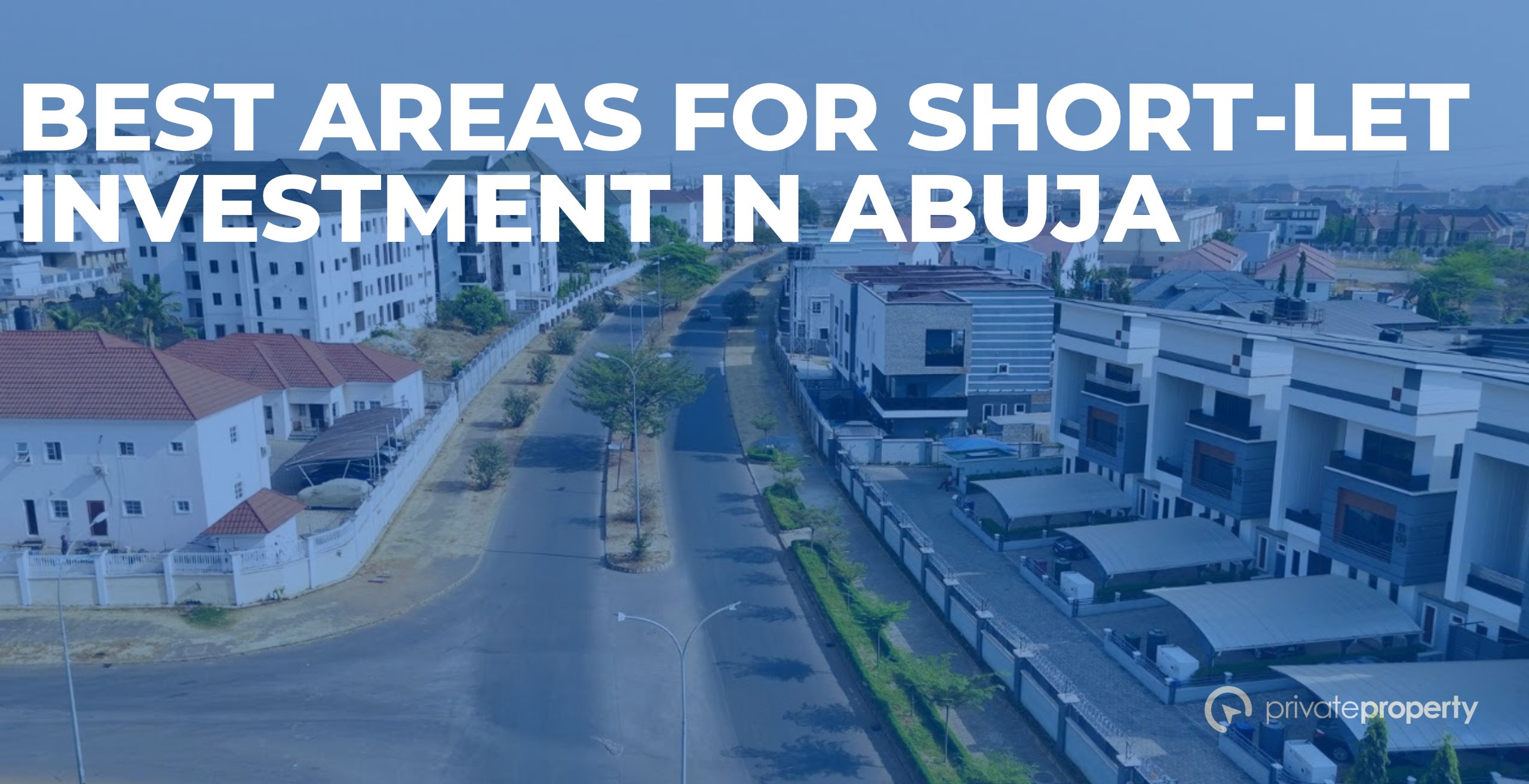
Short-Let Investment | Abuja, FCT
The short-let market in Abuja is no longer a side hustle. It is a structurally distinct asset class with its own demand drivers, yield profiles, operating requirements, and optimal locations — and it is outperforming the long-let residential market on cash flow metrics that matter to investors who have done the arithmetic. Short-let properties in Abuja’s central business districts are achieving gross yields of 10 to 18 per cent, compared with 2 to 7 per cent for equivalent long-let residential stock. For investors who are willing to manage the operational intensity that short-let hospitality requires, those numbers represent some of the most compelling returns in Nigerian real estate right now.
This guide is written for investors who want to deploy capital into Abuja’s short-let market with a clear-eyed understanding of where the demand comes from, which specific areas generate the highest yields, how different neighbourhoods serve different guest profiles, what a realistic operational setup looks like, and the honest risks that every short-let operator in the FCT must account for. It is not a promotional document. It is a practical tool for making a well-informed decision.
Why Abuja’s Short-Let Market Is Different from Lagos
Abuja’s short-let market has a demand structure that is fundamentally different from Lagos, and understanding that difference is essential before choosing where and how to invest.
Lagos’s short-let demand is driven primarily by lifestyle tourism, entertainment travellers, visiting diaspora, and a mix of business and leisure visitors who want Instagram-ready spaces in Lekki or Ikoyi. Abuja’s short-let demand is driven almost entirely by purpose travel: government officials visiting the capital from state postings, diplomats in transit, NGO and United Nations personnel on project assignments, corporate consultants on client mandates, contractors working on federal projects, and visiting professionals attending conferences, hearings, or government appointments. This is a visitor base that books on institutional travel budgets, stays for predictable durations, and cares more about WiFi speed and proximity to ministries than about rooftop infinity pools.
The practical implication is that Abuja’s short-let market is more stable and less volatile than Lagos’s. Government activity does not seasonalise the way tourism does. Federal budget cycles, National Assembly sessions, diplomatic calendars, and NGO project timelines create year-round demand that flows consistently into well-located, well-managed serviced apartments. That consistency is one of the strongest arguments for Abuja over Lagos as a short-let investment base for investors who want reliable income rather than peak-season windfalls punctuated by long vacancy troughs.
Short-Let Yield Comparison by Area (2026)
The table below summarises verified yield data and nightly rate ranges across Abuja’s main short-let areas, based on 2026 market data from The Africanvestor, Nigeria Housing Market, and Nigeria Property Centre:
| Area | Long-let yield | Short-let yield | Typical nightly rate | Primary short-let demand driver | Vacancy risk |
| Maitama | ~7% gross | 10–18%+ | ₦30k–₦120k | Embassy / NGO / government guests | Low |
| Wuse 2 | 2–3% (long-let) | 10–15%+ | ₦25k–₦80k | Corporate visitors; consultants | Low–Mod |
| Jabi | 6–8% | 10–14% | ₦20k–₦60k | Lifestyle travellers; Jabi Lake proximity | Low–Mod |
| Utako | 5–7% | 9–13% | ₦18k–₦55k | Mid-price corporate stays; well located | Moderate |
| Garki | 5–7% | 8–12% | ₦15k–₦50k | Government workers; NGOs; transit | Moderate |
| Games Village | N/A | 12–18%+ | ₦30k–₦90k | Corporate; diplomatic; event visitors | Low |
| Gwarinpa | 6–10% | 9–13% | ₦15k–₦45k | Families; professionals; budget corporate | Low–Mod |
| Lokogoma | 7–10% | 10–15% | ₦12k–₦38k | Value-seekers; young professionals | Moderate |
1. Maitama — The Premium Benchmark
Maitama is Abuja’s most prestigious residential district and its strongest long-let rental yield performer, with gross yields of approximately 7 per cent — the highest of any Abuja neighbourhood in conventional long-let data. In the short-let market, Maitama’s yields are meaningfully higher still, driven by its concentration of embassies, United Nations agencies, international NGOs, and high-ranking government officials who create consistent demand for premium furnished accommodation at nightly rates that Airbnb data consistently places among the highest in the FCT.
The profile of a Maitama short-let guest is specific: a diplomat or senior NGO officer who has a housing budget, not a housing price sensitivity; who needs security, reliable power, and proximity to the embassy district; and who stays for weeks or months rather than days. This makes Maitama less suited to casual leisure short-let and more suited to corporate serviced apartment operations with minimum stay requirements. Vacancy rates in Maitama for well-managed premium properties sit at approximately 5 to 8 per cent — the tightest of any Abuja neighbourhood category. For investors with the capital for a Maitama property, the combination of yield, tenant quality, and vacancy rate is compelling.
| 📊 Maitama Short-Let SnapshotGross short-let yield: 10–18%+ (vs. ~7% long-let)Typical nightly rate: ₦30,000–₦120,000 depending on size and specPrimary guest: Diplomats, UN/NGO personnel, senior government visitorsVacancy rate: ~5–8% (tightest in Abuja)Optimal property: 2–3-bed furnished apartment; minimum-stay serviced modelKey advantage: Institutional demand — largely budget-insensitive |
2. Wuse 2 — The Corporate Workhorse
Wuse 2 presents one of Abuja’s most instructive short-let investment cases. In the long-let market, it delivers disappointing yields — approximately 2 to 3 per cent gross — because property prices have risen 15 to 20 per cent annually in recent years while rents have not kept pace. For a long-let investor who paid today’s Wuse 2 prices, the yield arithmetic simply does not work.
For a short-let operator, the same location tells a completely different story. Wuse 2 is Abuja’s most active commercial hub, home to the highest concentration of corporate offices, banks, law firms, consultancies, and retail in the FCT. That commercial density creates a permanent flow of corporate visitors, business travellers, and short-assignment consultants who need accommodation within walking or short-drive distance of their workplaces. Short-let properties in Wuse 2 achieve nightly rates of ₦25,000 to ₦80,000 and occupancy rates that reflect the consistent weekly business travel pattern. An operator running a two-bedroom serviced apartment in Wuse 2 at even moderate occupancy can generate returns that make the long-let numbers look absurd by comparison. This is the clearest example in Abuja of how operating model choice transforms a property’s investment case.
3. Jabi — The Lifestyle Differentiator
Jabi occupies a distinctive position in Abuja’s short-let market because it serves a guest profile that no other FCT neighbourhood can match as well: the lifestyle traveller who wants proximity to Jabi Lake, the Jabi Mall complex, restaurants, and a genuine out-of-office feel within the capital. Jabi Lake Mall, the lake-adjacent recreational area, and the growing cluster of restaurants and social venues around the waterfront create a leisure environment that government-district neighbourhoods simply cannot replicate.
Short-let properties in Jabi achieve nightly rates of ₦20,000 to ₦60,000 and attract a mix of corporate professionals on mid-length assignments who want something more pleasant than a hotel-adjacent apartment, diaspora visitors who want a comfortable base for family stays, and weekend leisure travellers from other parts of Nigeria. Long-let yields in Jabi run at 6 to 8 per cent, but the short-let premium pushes blended returns meaningfully higher for active operators. Jabi is also one of the better entry price points on this list relative to the yield it delivers — making it one of the strongest options for investors with moderate capital who want a well-balanced risk-return profile.
4. Utako — Accessible Value in the Mid-Market
Utako is one of Abuja’s most consistently overlooked short-let markets, and that oversight is an opportunity for investors who do their homework. Located close to the Central Area and well-connected to both the commercial districts and the airport expressway, Utako offers mid-priced serviced apartment stays at nightly rates of ₦18,000 to ₦55,000 that attract a broad corporate and government visitor base who want Abuja-central proximity at a lower price point than Maitama or Wuse 2 commands.
The Utako market is particularly well-suited to investors entering the short-let space for the first time, because acquisition costs are meaningfully lower than the more prestigious addresses while demand is still consistent enough to support viable yields. A well-furnished two-bedroom apartment in Utako, managed professionally with a responsive booking platform presence, can generate yields in the 9 to 13 per cent range — a return profile that justifies the investment at current entry prices.
5. Garki — The Government Adjacency Play
Garki is one of Abuja’s oldest established districts and sits immediately adjacent to the Central Area, making it one of the most strategically positioned neighbourhoods for short-let demand from government workers, NGO staff, and visiting officials who need accommodation within easy reach of federal ministries and agencies. Garki Districts 1 and 2 are well-served by roads, have a functional commercial strip, and offer a mature residential character that attracts guests who are visiting for purposeful rather than leisure reasons.
Nightly rates in Garki run from ₦15,000 to ₦50,000, and the guest profile — civil servants on temporary postings, visiting contractors, NGO field staff — tends toward longer minimum stays that reduce operational complexity for the property manager. For investors who want a less actively managed short-let operation, Garki’s longer average stay duration makes it one of the more operationally straightforward short-let markets in the FCT.
6. Games Village — The Emerging Premium Surprise
Games Village has historically been known primarily as the location of Abuja’s national sports infrastructure — built for the All Africa Games and subsequently home to the National Stadium complex and associated facilities. What 2025 revealed, and what 2026 is confirming, is that Games Village has become one of Abuja’s busiest short-let hubs for corporate housing, serviced apartment demand, and event-adjacent accommodation. Demand for short-let bookings in the area outpaced supply in 2025, with units selling out at rates 40 per cent faster than in 2024 according to Abuja Developers Association data.
The reasons are practical: Games Village is well-located relative to both the Central Area and the southern districts, offers large compound sizes that accommodate multiple units within a single managed estate, and has a security infrastructure from its government facility origins that appeals to diplomatic and corporate tenants. Nightly rates of ₦30,000 to ₦90,000 reflect the premium nature of demand, and short-let yields of 12 to 18 per cent make it one of the strongest yield performers currently tracked in the FCT short-let market.
7. Gwarinpa and Lokogoma — The Volume Play
For investors whose capital base is oriented toward the mid-market rather than the premium end, Gwarinpa and Lokogoma offer a different but equally valid short-let investment case. Gwarinpa — West Africa’s largest housing estate by some measures — generates gross rental yields of 6 to 10 per cent in the long-let market and 9 to 13 per cent in short-let, with the lowest vacancy risk of any established Abuja suburb. Nigeria Property Centre consistently identifies Gwarinpa as one of the fastest-letting neighbourhoods in the city, reflecting genuine depth of demand across all accommodation types.
Lokogoma offers slightly higher yield potential in the 10 to 15 per cent range for short-let operations, driven by a growing population of young professionals and families who generate both direct short-let demand and a landlord tenant base that increasingly accepts short-let management arrangements. Analysts project a 15 to 20 per cent rise in rental ROI from Lokogoma in 2026 as new estates reach completion and access roads improve. At current entry prices, both Gwarinpa and Lokogoma offer strong risk-adjusted returns for investors who want volume exposure to Abuja’s residential rental market without the high acquisition costs of the central districts.
What Actually Makes a Short-Let Investment Work in Abuja
Yield figures are only meaningful if the operational conditions that generate them are understood and planned for. Several factors determine whether a short-let investment in Abuja actually delivers its projected returns:
Power is non-negotiable. Abuja short-let guests — especially the corporate and diplomatic segment — have zero tolerance for power outages. A property without a reliable backup power solution will receive negative reviews and lose bookings immediately. Budget for a minimum of an inverter with adequate battery capacity, and treat solar or generator backup as a standard cost of operation rather than an optional upgrade.
Internet is the second utility. Reliable, fast WiFi is the single most-mentioned requirement in Abuja short-let guest reviews. A dedicated fibre connection — not shared estate WiFi — is the minimum standard for a property targeting corporate and diplomatic guests. Budget for it from day one.
Professional management lifts occupancy meaningfully. Self-managed short-let properties in Abuja consistently underperform professionally managed ones, primarily because professional operators maintain 24-hour responsiveness, handle check-in logistics reliably, and manage platform presence actively. A reputable short-let management company typically charges 20 to 30 per cent of revenue but delivers occupancy rates that more than justify the fee for most investors.
Furnishing standard determines guest tier. The guest you attract is a direct function of the specification level of your furnishing. A property furnished to a five-star hotel standard attracts the corporate and diplomatic guest paying ₦50,000 to ₦120,000 per night. A property furnished to “basic but clean” standards attracts the budget government worker paying ₦15,000 per night. The yield gap between these two tiers is significant. Invest in the furnishing.
Location within the district matters more than the district name. A well-located apartment on a poorly lit, hard-to-find side street will underperform a standard apartment on a main road with good signage and easy access. Within any of the areas in this guide, proximity to the main road, easy access for Bolt and Uber drivers, and a visible, safely accessible entrance meaningfully affect booking volume and review scores.
The Honest Risks
Short-let investment in Abuja carries risks that long-let does not, and every investor must account for them:
• Operational intensity: short-let requires active, daily management — guest communications, cleaning turnovers, maintenance responses, and platform management. Investors who cannot manage this directly must budget for professional management costs.
• Regulatory uncertainty: the FCT and individual estate managements are increasingly imposing rules on short-let operations within managed estates. Some estates prohibit commercial short-let activity entirely. Always confirm estate rules before purchasing for short-let.
• Guest quality variability: unlike a vetted long-term tenant, short-let guests vary in how they treat the property. Damage deposits and comprehensive inventory checklists are essential, not optional.
• Platform dependency: most Abuja short-let revenue flows through Airbnb, Booking.com, and a small number of Nigerian booking platforms. Changes to platform algorithms, fees, or policies can affect booking volumes significantly. Maintain a direct booking channel alongside platform listings.
• Seasonality within government cycles: while Abuja’s short-let market is less seasonal than Lagos, demand does fluctuate with National Assembly recesses, government budget cycles, and diplomatic calendar periods. Build a cash reserve to cover operational costs during lower-demand periods.
Final Thoughts: The Opportunity Is Real, But the Work Is Real Too
Abuja’s short-let market is generating yields that conventional long-let residential investment in Nigeria cannot match: 10 to 18 per cent gross in the premium central districts, driven by a structurally stable demand base of government, diplomatic, and corporate visitors whose travel budgets are largely independent of the economic volatility that affects leisure tourism. That is a genuine and documented investment opportunity.
But it is not a passive one. Short-let investment is an operating business wrapped in a real estate asset, and it rewards investors who treat it that way — with professional management, good furnishing, reliable infrastructure, and active platform presence. The investors who approach it as a set-and-forget rental proposition will find that the yield gap between short-let potential and short-let reality is uncomfortably wide. The investors who run it like the business it is will find that Abuja’s purpose-driven visitor economy provides one of the most reliable income streams in Nigerian real estate right now.
All yield figures and nightly rate ranges cited in this guide are based on 2026 market data from The Africanvestor, Nigeria Housing Market, Nigeria Property Centre, and Abuja Developers Association sources. Individual property returns will vary based on location specifics, furnishing standard, management quality, and occupancy achieved. This guide is for informational purposes only and does not constitute investment advice.