Ask a Lagos Island resident about Ogba and you will likely get a shrug or a vague acknowledgment that it exists somewhere on the mainland. Ask a Lagos mainland professional — someone who works in Ikeja, commutes to the industrial corridor, or has spent time navigating the Agidingbi-Wempco-College Road axis — and you will get a very different response. Ogba, they will tell you, is one of the most genuinely liveable and strategically positioned neighbourhoods in Lagos, and one of the most consistently underestimated by people who have never actually lived there.
Ogba is not trying to be Lekki. It is not trying to be Ikoyi. It is doing something more grounded and, for a large portion of Lagos’s professional population, more useful: it is delivering a residential experience that combines accessibility to the city’s commercial and industrial backbone, a settled community character built over decades, a road network that still functions under normal conditions, and a property market that — crucially — has not yet fully priced in its own advantages. For buyers and renters who do their homework, Ogba remains one of the best-value addresses in Lagos.
This guide covers everything worth knowing about Ogba: its location, its character, its key streets and estates, its amenities, what property costs here in October 2026, and who this neighbourhood genuinely suits.
Where Is Ogba?
Ogba is located in the Ikeja Local Government Area of Lagos State, on the mainland, positioned between Agidingbi to the east, Ifako-Ijaiye to the west, Agege to the north, and Ikeja GRA to the south. Its position within the Ikeja axis is central to its appeal: it sits within minutes of the Ikeja commercial and industrial corridor, the local and international airports, the Murtala Muhammed Airport Road, and the major road network that connects the Lagos mainland to the island via the Third Mainland Bridge.
The neighbourhood’s primary artery is College Road, which serves as the commercial spine of the area and provides direct connectivity to Agidingbi, Ikeja, and the broader mainland road network. Haruna Street, Oke-Ira, Obawole, and Wempco Road form the internal residential and light industrial grid that gives Ogba its layered, mixed-use character. The WEMCO industrial zone along Wempco Road — one of Lagos’s most established light industrial and manufacturing corridors — sits on Ogba’s northern edge, contributing both employment activity and some commercial traffic to the neighbourhood.
What Life in Ogba Actually Feels Like
Ogba is one of Lagos’s most settled, community-rooted neighbourhoods. Unlike the rapid-growth corridors of the Lekki Peninsula, where gated estates have been assembled on what was essentially agricultural land within the past two decades, Ogba has been a functioning residential community for long enough to have developed the organic social infrastructure that makes a neighbourhood genuinely liveable: churches and mosques that have served the same families for generations, local markets with established traders, roads that are known to residents and taxi drivers alike by name and character, and a community fabric that does not depend on estate management companies to hold it together.
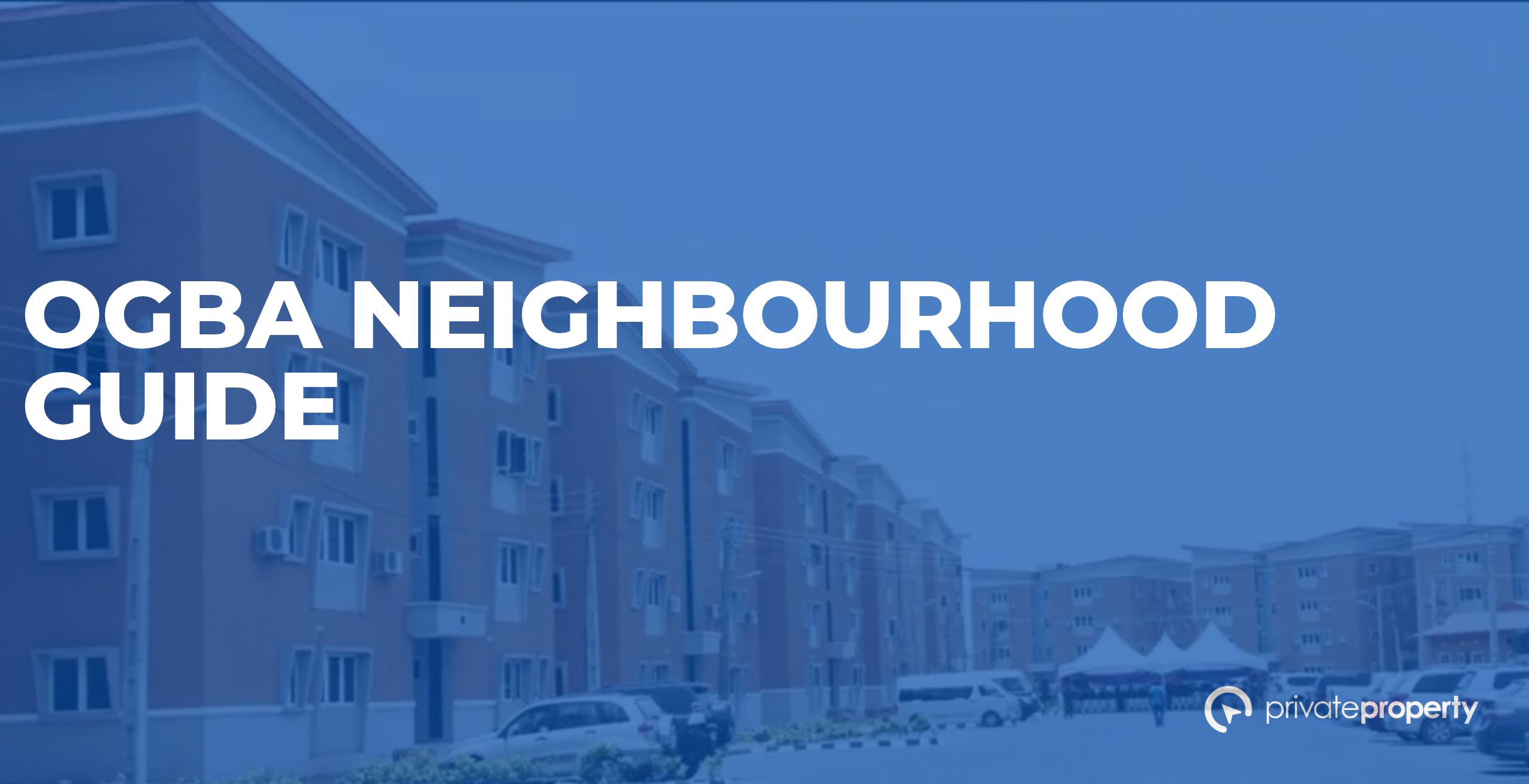
That settled character is visible in the mix of housing stock. Ogba contains older mid-rise apartment blocks from the 1970s and 1980s sitting alongside brand-new 4-bedroom fully detached duplexes with BQ, fitted kitchens, and governors’ consent documentation. New developments are being built actively — but they are being grafted onto an existing community rather than built from scratch, which gives Ogba a depth of character that newer, more homogeneous neighbourhoods cannot replicate.
The daily rhythm of life in Ogba reflects its positioning as a working mainland neighbourhood rather than a prestige residential enclave. Weekday mornings are purposeful — the Ikeja-bound commuter traffic on College Road is real and consistent, the Sunday market draws vendors and buyers from across the mainland, and the commercial activity along the road’s frontage handles a genuine portion of the neighbourhood’s daily needs without requiring trips to a formal mall. Evenings bring the local food vendors, the neighbourhood churches’ weeknight services, and the particular social energy of a community where people actually know each other across years rather than months.
Key Streets and Sub-Areas
College Road
College Road is Ogba’s commercial spine and its most important navigational reference. Named for its historical proximity to educational institutions in the Ifako corridor, it runs through the heart of the neighbourhood, hosting banks, pharmacies, supermarkets, eateries, phone shops, fashion retailers, and the kind of street-facing commercial density that makes daily errands walkable. College Road is also the address most cited in property listings for the neighbourhood — “off College Road” is the standard location reference for residential properties throughout Ogba.
Haruna Street (off College Road)
Haruna Street is one of the most active residential and commercial sub-streets in Ogba, running off College Road into the residential interior of the neighbourhood. A significant number of estate developments — including Adekoya Estate on Haruna and several gated mini-compounds — are addressed here, making it one of the neighbourhood’s most property-active streets. It combines residential use with light commercial activity in a way that is characteristic of Ogba’s general character.
Obawole
Obawole is one of Ogba’s most established sub-communities, with a residential character that runs from modest shared flats and self-contained rooms at the budget end to well-presented apartment blocks and private houses. K Farm Estate (Kayfarm Estate) Obawole is one of the most consistently cited estate addresses on this street, offering 2-bedroom flats and larger units in a managed compound environment. Obawole’s relative affordability within the Ogba area makes it a natural entry point for first-time renters on the mainland.
Oke-Ira
Oke-Ira is a sub-community within Ogba with a mix of older residential stock and newer private houses. William Estate Oke-Ira is one of the named estates operating in this sub-area, and several apartment blocks and standalone houses addressing Oke-Ira appear regularly in rental listings. The area has a residential character that is slightly quieter than the College Road frontage and suits residents who want to be within the Ogba radius without the commercial noise of the main road.
Wempco Road
Wempco Road runs along the edge of Ogba toward the WEMCO industrial zone and Ikeja. It is primarily a light industrial and commercial corridor, with warehousing and manufacturing activity alongside residential pockets. The road provides important connectivity for goods movement and is referenced in some commercial and industrial property listings, though it is less significant as a residential address than College Road or Haruna Street.
Aguda and Omoonile
These sub-communities form part of the residential interior of Ogba, with a character that tends toward older residential stock, family compounds, and a more traditional community fabric than the more commercially active main road areas. County Hospital is located in the Aguda sub-area, providing healthcare access from within the neighbourhood.
Key Estates in Ogba
Dideolu Estate
Dideolu Estate is the most prestigious and well-known residential estate in Ogba, and it sets the benchmark for the neighbourhood’s upper-tier property market. The estate hosts some of Ogba’s most significant listings — including a 5-bedroom luxury duplex with swimming pool listed at ₦540 million — and its address commands a premium within the broader Ogba market. Dideolu Estate is the reference point for buyers seeking the Ogba address at the highest specification level, and properties here consistently appear at the top of the neighbourhood’s price range for both sale and rental.
Adekoya Estate (Haruna, College Road)
Adekoya Estate on Haruna off College Road is one of the more active estate addresses in Ogba’s mid-market. Newly built 4-bedroom semi-detached duplexes with BQ are being listed and sold here, with pricing reflecting good value by Ikeja corridor standards. The estate’s College Road proximity gives it strong accessibility and commercial convenience, and its new-build stock attracts buyers who want modern finishes within an established neighbourhood.
Kfarm Estate (Kayfarm, Obawole)
K Farm Estate in the Obawole sub-area is one of Ogba’s most consistently active mid-market estate addresses, appearing regularly in both rental and for-sale listings. It offers 2-bedroom flats and larger units at pricing that makes it one of the more accessible options for professionals entering the Ogba rental market. Shared flat arrangements within K Farm are also active, serving the budget segment of the resident market.
Nelson Cole Estate, County Estate, William Estate
These smaller estates serve the Ogba residential market at various price points and are frequently cited in rental listings for 2-bedroom and 3-bedroom apartments. Nelson Cole Estate and County Estate are in the neighbourhood, reflecting genuine demand for professionally managed residential compounds in a neighbourhood that has historically been dominated by privately owned individual properties.
Alamutu Estate (off Iju Road)
Alamutu Estate off Iju Road on the Ogba periphery is home to new-build duplex developments that serve buyers looking for standalone residential properties with modern specifications at Ogba prices. A newly built 4-bedroom duplex is currently listed here at ₦250 million, reflecting the neighbourhood’s emerging upper-mid market as new developers move into the area.
Amenities and Daily Living
Shopping and Commercial
The Ogba Multipurpose Shopping Complex, located along the Sunday market stretch, is the neighbourhood’s most established commercial anchor. Ogba’s Sunday market is one of the most well-known periodic markets on the Lagos mainland, drawing traders and buyers from across the Ikeja corridor with a comprehensive range of fresh produce, household goods, fashion, and general merchandise. College Road’s commercial frontage handles the daily needs that do not require a formal retail environment: banks (multiple branches line the road), pharmacies, phone and electronics shops, salons, tailors, fast food outlets, and supermarkets are all accessible within a short walk or drive.
Healthcare
County Hospital serves the Ogba community from within the Aguda sub-area, providing public healthcare access that is uncommon in many Lagos neighbourhoods at this level of residential density. Several private clinics and pharmacies supplement County Hospital across the neighbourhood, and the Ikeja axis — within five to ten minutes — provides access to some of the mainland’s better private hospital facilities including Lagos State University Teaching Hospital (LASUTH) in nearby Ikeja.
Schools
Ogba and its immediate environs are well served by schools at all levels. The neighbourhood’s long residential history means that schools — including both public institutions and private schools — have been established here for decades and serve an established student population. The broader Ifako-Ijaiye and Ikeja axis further expands the educational options available to families resident in Ogba.
Transport and Connectivity
Ogba’s single most important practical advantage is its connectivity to the Ikeja commercial and industrial corridor — one of Lagos’s most employment-dense zones — within five to ten minutes. The local and international airports are accessible within fifteen minutes under normal traffic conditions, making Ogba one of the most airport-convenient residential addresses on the mainland. The BRT corridor along the Lagos-Abeokuta Expressway provides public transport access to the island via the Third Mainland Bridge. Molue buses, minibuses, and tricycles connect residents to Ikeja, Agidingbi, Berger, and other mainland hubs throughout the day.
Dining, Leisure, and Community
Ogba’s leisure and dining scene is community-led rather than curated. The neighbourhood has a strong concentration of local restaurants, suya spots, pepper soup joints, and informal eateries that serve the substantial working population of the Ikeja corridor. Churches and mosques of multiple denominations are prominent throughout the neighbourhood — the concentration of places of worship in Ogba is one of the highest of any Lagos neighbourhood, reflecting the depth of community roots and the religious character of its long-term resident base. Recreational options are limited within the immediate neighbourhood but the Ikeja Recreational Club and the Lagos Country Club are accessible within a short drive.
Property Prices and the Rental Market
Ogba’s property market is active, diverse, and genuinely good value by Lagos mainland standards. an average flat sale price of approximately ₦260 million and an average annual flat rent of ₦10 million. The range is wide — from shared rooms at ₦800,000 annually to luxury 5-bedroom duplexes at ₦685 million for sale. The deepest market activity sits in the 2-to-4-bedroom tier, which accounts for the majority of both listings and transactions.
| Property Type | Annual Rent | Sale Price | Notes |
| Self-contain / shared room | ₦800k – ₦2m | ₦40m – ₦65m | Budget entry; Obawole, Oke-Ira axis |
| Mini flat / 1-bed apartment | ₦1.5m – ₦3.5m | ₦65m – ₦120m | College Road environs; Adeniji St area |
| 2-bed apartment / flat | ₦2.5m – ₦6m | ₦100m – ₦180m | Average flat rent ~₦10m |
| 3-bed apartment / flat | ₦5m – ₦10m | ₦140m – ₦260m | Off College Rd; Haruna; Nelson Cole Estate |
| 4-bed semi/fully detached | ₦10m – ₦25m | ₦195m – ₦450m | Dideolu, Adekoya, Kfarm, Alamutu estates |
| 5-bed luxury duplex | ₦25m – ₦50m | ₦450m – ₦685m+ | Pool, BQ; Dideolu Estate top end |
| Commercial land (College Rd) | N/A | ₦900m (corner piece, 2 plots) | Prime commercial frontage; C of O |
Average flat rent in Ogba is ₦10 million per year, with the cheapest flats available from ₦900,000 annually and the most expensive reaching ₦8.5 million. Average house sale price sits at ₦260 million across 627 houses for sale as of October 2026, ranging from ₦65 million at the entry end to ₦685 million for the most expensive listings. Land is available from ₦27 million per plot (400 sqm) to ₦900 million for prime double-plot commercial frontage on College Road. Service charges in estate properties typically add ₦300,000 to ₦600,000 annually above headline rents.
The Investment Case for Ogba
Ogba’s investment case rests on a structural argument that is easy to state and difficult to dismiss: it sits within the Ikeja axis — one of Lagos’s most important and most employment-dense commercial and industrial zones — at a meaningful price discount to its more prestigious immediate neighbour, Ikeja GRA. That discount reflects historical perception rather than functional reality. The commute from Ogba to the Ikeja commercial strip is five to ten minutes. The commute from Ikeja GRA to the same destination is the same. The difference in cost is not.
For rental investors, the Ikeja corridor’s permanent employment base — drawn from airlines and aviation services, manufacturing along the Wempco Road industrial corridor, civil service and government agencies, and the broader commercial activity of Ikeja’s banking and professional services district — provides a consistent demand floor that does not depend on property prestige or social caching to sustain. Tenants in Ogba are people who work nearby and want a reasonable home within commuting distance of their job. That demand is durable, largely independent of macroeconomic cycles, and deep enough to keep vacancy low for well-presented properties.
The shortlet market is a growing additional opportunity, driven by Ogba’s airport proximity. Corporate visitors and business travellers needing accommodation within fifteen minutes of Lagos’s international and domestic airports represent a consistent demand base for well-furnished Ogba apartments, and the cost advantage over Ikeja GRA shortlets makes Ogba competitive on platform pricing while maintaining viable nightly rates.
What to Know Before You Move or Invest
Traffic on College Road is real. College Road carries significant commercial and commuter traffic throughout the day, and the junction areas at peak hours can slow substantially. Residents who commute by car should test their specific route at their actual commute time. Side streets like Haruna offer somewhat better flow than the main road itself.
The neighbourhood is genuinely mixed. Ogba is not a gated enclave and does not present itself as one. It is a mixed residential and commercial neighbourhood where older housing, new developments, churches, mosques, market activity, and light commercial businesses coexist. Buyers and renters seeking a purely residential, curated estate environment should look at neighbouring Ikeja GRA instead.
Estate vs. street-facing property matters. Properties within managed estates in Ogba are better maintained, more secure, and command higher rents than street-facing stand-alone properties of comparable size. If security and estate management are priorities, focus the search on named estate compounds rather than individual street-facing houses.
Flooding risk varies by sub-area. Some low-lying pockets in and around Ogba experience flooding during heavy rainy season downpours. The Obawole axis has some historically flood-prone sections. Always inspect the specific property’s drainage situation and ask current neighbours about flooding history before committing.
Title documentation is variable. Ogba has a mix of title types: C of O, Governor’s Consent, Global C of O, and older family-land documentation. Always conduct a title search through the Lagos State Land Registry before any purchase. Use a qualified Lagos property lawyer for all transactions and do not rely solely on the selling agent’s title assurances.
The Sunday market changes the road. On Sundays, the market activity along College Road significantly increases footfall and vehicle movement in the neighbourhood. This is a feature, not a bug — it is part of Ogba’s community fabric — but residents who need quiet Sundays or easy Sunday morning car access should be aware of the pattern.
Who Is Ogba Right For?
Ogba works best for:
• Mainland professionals working in the Ikeja commercial, industrial, or aviation corridor who want a comfortable, accessible residential base within short commuting distance of their workplace.
• Families who want a settled, community-rooted neighbourhood with established schools, healthcare, and a genuine social fabric — rather than a newly developed gated estate with no surrounding community.
• First-time buyers on the mainland who want a credible, well-connected address with documented appreciation history at a meaningful price discount to the more prestigious Ikeja GRA.
• Property investors targeting the Ikeja corridor’s permanent employment base for reliable, long-term rental income at yields that justify the acquisition cost.
• Airport-adjacent shortlet operators who want to serve a consistent corporate visitor and business traveller market at competitive nightly rates with lower acquisition costs than Ikeja GRA.
• Returners and diaspora buyers who know the Ogba and Ikeja corridor and want a neighbourhood with genuine community character rather than the anonymity of a purely estate-based address.
Final Thoughts
Ogba does not need a rebrand or a marketing campaign. It needs to be understood for what it actually is: one of the most strategically located, genuinely liveable, and consistently underpriced residential neighbourhoods on the Lagos mainland. Its proximity to Ikeja’s employment base, its airport accessibility, its established community character, and its price discount to Ikeja GRA are all real advantages that are not going away. What is likely going away, gradually, is the price discount itself — as more buyers and investors do the arithmetic and recognise that the gap between Ogba and its more prestigious neighbour does not reflect a gap in functional value.
The residents who figured this out years ago are sitting on properties that have appreciated consistently and quietly while the market’s attention was focused on the island and its satellite corridors. The opportunity to join that group still exists, but it is narrowing as new developments bring more buyers to a neighbourhood that has been building its case, without fanfare, for decades.